Vercel agent-browser: The Future of AI Web Automation
TL;DR: Vercel agent-browser is an open-source tool that provides a streamlined interface for Large Language Models (LLMs) to interact with web browsers. It means enterprises can now build autonomous agents that navigate the web with human-like precision, moving beyond simple chat interfaces to actual task execution.
In the rapidly evolving landscape of artificial intelligence, the transition from conversational AI to actionable AI agents marks a significant milestone. For businesses in Vancouver and across the globe, the challenge has always been bridging the gap between an AI's reasoning capabilities and its ability to interact with the digital world. Vercel agent-browser emerges as a critical piece of infrastructure in this transition, acting as the "digital hands" for models like GPT-4 and Claude.
At NexAgent, we have observed that traditional automation tools often fall short when faced with the dynamic nature of modern web applications. Vercel agent-browser addresses these shortcomings by providing a specialized abstraction layer designed specifically for AI consumption. This is not just another testing tool; it is a foundational element for the next generation of AI Automation Vancouver initiatives.
What is Vercel agent-browser and Why Does it Matter?
To understand the significance of Vercel agent-browser, one must first look at the history of web automation. For years, developers relied on frameworks like Puppeteer or Playwright. While these tools are incredibly powerful for automated testing and web scraping, they were never intended to be controlled by an AI in real-time. They require explicit, hard-coded instructions for every click, scroll, and keystroke.
When an LLM attempts to use these traditional tools, it often gets bogged down by the sheer complexity of the Document Object Model (DOM). A single webpage can contain thousands of lines of HTML code, most of which is irrelevant to the task at hand. Vercel agent-browser simplifies this by providing a high-level CLI and API that filters out the noise, allowing the agent to focus on actionable elements.
This tool matters because it lowers the barrier to entry for creating "autonomous agents." These are programs that can receive a high-level goal—such as "find the cheapest flight from Vancouver to London next Tuesday"—and execute all the intermediate steps in a browser without human intervention. By leveraging the Vercel agent-browser GitHub repository, developers can now build agents that are more resilient to UI changes and more efficient in their execution.
How Does Vercel agent-browser Transform Enterprise Workflows?
For an enterprise, the value of AI is measured by its ability to save time and reduce errors in repetitive tasks. Vercel agent-browser transforms workflows by enabling agents to interact with SaaS platforms that don't have public APIs. Many legacy systems used by Vancouver businesses require manual data entry through a web interface.
By integrating Vercel agent-browser with advanced models like Anthropic's Claude or OpenAI's GPT-4, companies can automate these manual processes. The agent can log in, navigate to the correct page, extract the necessary data, and even fill out forms. This capability is enhanced when combined with GEO & AEO Services, ensuring that the content generated and interacted with is optimized for modern search and discovery engines.
Consider the following impact areas for enterprise automation:
- Automated Market Research: Agents can browse competitor websites, track pricing changes, and summarize industry news in real-time.
- Customer Support Augmentation: AI agents can navigate internal knowledge bases and customer portals to resolve complex tickets that require multi-step web interactions.
- Data Synchronization: Automatically moving data between disparate web-based tools that lack native integrations.
- Quality Assurance: Performing complex user-journey testing that mimics real human behavior more closely than traditional scripts.
Why Should Vancouver Businesses Adopt Autonomous Web Agents Now?
Vancouver has established itself as a premier tech hub, home to a burgeoning ecosystem of AI startups and established tech giants. As competition intensifies, the ability to deploy autonomous agents becomes a significant competitive advantage. NexAgent is at the forefront of this movement, helping local enterprises implement these cutting-edge tools safely and effectively.
Adopting Vercel agent-browser now allows businesses to stay ahead of the curve in the "Agentic Web" era. As models like Google's Gemini and OpenAI's latest iterations become more capable of "computer use," having the right infrastructure to facilitate that use is paramount. Furthermore, for organizations concerned about data privacy, NexAgent offers Private AI Deployment options that ensure your browser-based agents operate within a secure, controlled environment.
- Local Expertise: Working with a Vancouver-based agency ensures that your AI strategy is aligned with local market dynamics.
- Scalability: Vercel’s infrastructure is built for scale, meaning your agents can grow alongside your business.
- Cost Efficiency: Reducing the need for manual oversight of web tasks directly impacts the bottom line.
- Innovation: Being an early adopter of agentic workflows positions your brand as a leader in the AI space.
Technical Architecture and Integration with LLMs
The architecture of Vercel agent-browser is designed to be model-agnostic. While it works exceptionally well with the latest Anthropic Computer Use capabilities, it can also be integrated with any LLM that supports function calling or tool use. The core philosophy is to treat the browser as a "tool" that the model can invoke whenever it needs to access live information or perform an action on the web.
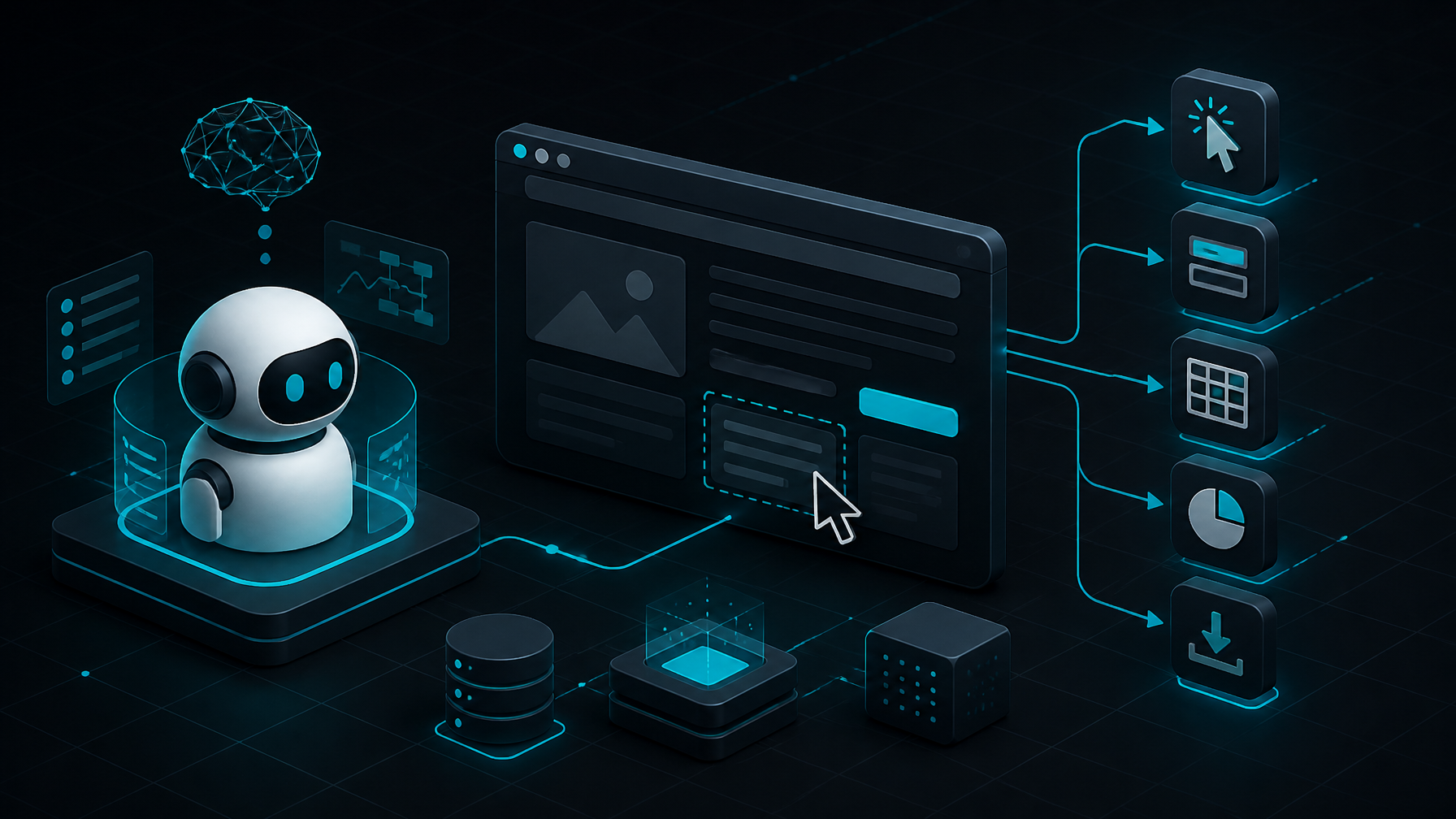
One of the most impressive features is the way it handles the "Observation-Action" loop. In a typical session, the agent will:
- Observe: Take a screenshot or a simplified snapshot of the current page state.
- Think: Analyze the state based on the user's goal using its internal reasoning (e.g., via GPT or Claude).
- Act: Send a command through Vercel agent-browser to click a button, type text, or navigate to a new URL.
- Repeat: Continue the loop until the task is completed or an error is encountered.
This loop is significantly more robust than traditional scraping because the AI can adapt to unexpected pop-ups, layout shifts, or CAPTCHAs that would break a standard script. The integration of the Model Context Protocol (MCP) further enhances how these agents share state and tools across different platforms.
Can Vercel agent-browser Replace Manual Data Entry?
The short answer is yes, but with caveats. While Vercel agent-browser provides the mechanics for automation, the success of the implementation depends on the underlying model's reasoning and the quality of the prompts. For high-stakes data entry, human-in-the-loop systems are still recommended. However, for the vast majority of administrative web tasks, the combination of Vercel’s tool and NexAgent’s implementation expertise can achieve near-total autonomy.
According to research on instruction-following models by OpenAI, the ability of AI to execute complex, multi-step instructions has improved dramatically. This makes the prospect of replacing manual data entry not just a possibility, but an impending reality for most digitally-native businesses.
Conclusion: Navigating the Agentic Future with NexAgent
Vercel agent-browser is more than just a library; it is a signal that the way we interact with the internet is changing. We are moving away from a world where humans are the only ones navigating browsers, toward a future where AI agents act as our proxies. For businesses in Vancouver, this represents an unprecedented opportunity to optimize operations and innovate at scale.
NexAgent is committed to guiding enterprises through this transition. By leveraging tools like Vercel agent-browser and providing specialized services in AI Automation Vancouver, we ensure that our clients are not just observers of the AI revolution, but active participants. Whether you are looking to secure your workflows with Private AI Deployment or optimize your digital presence through GEO & AEO Services, the future of web automation starts here.
As we look toward 2025, the integration of browser-based agents will become a standard requirement for any enterprise AI strategy. Vercel has provided the tool; NexAgent provides the expertise. Together, we can build a more autonomous, efficient, and intelligent digital future.